
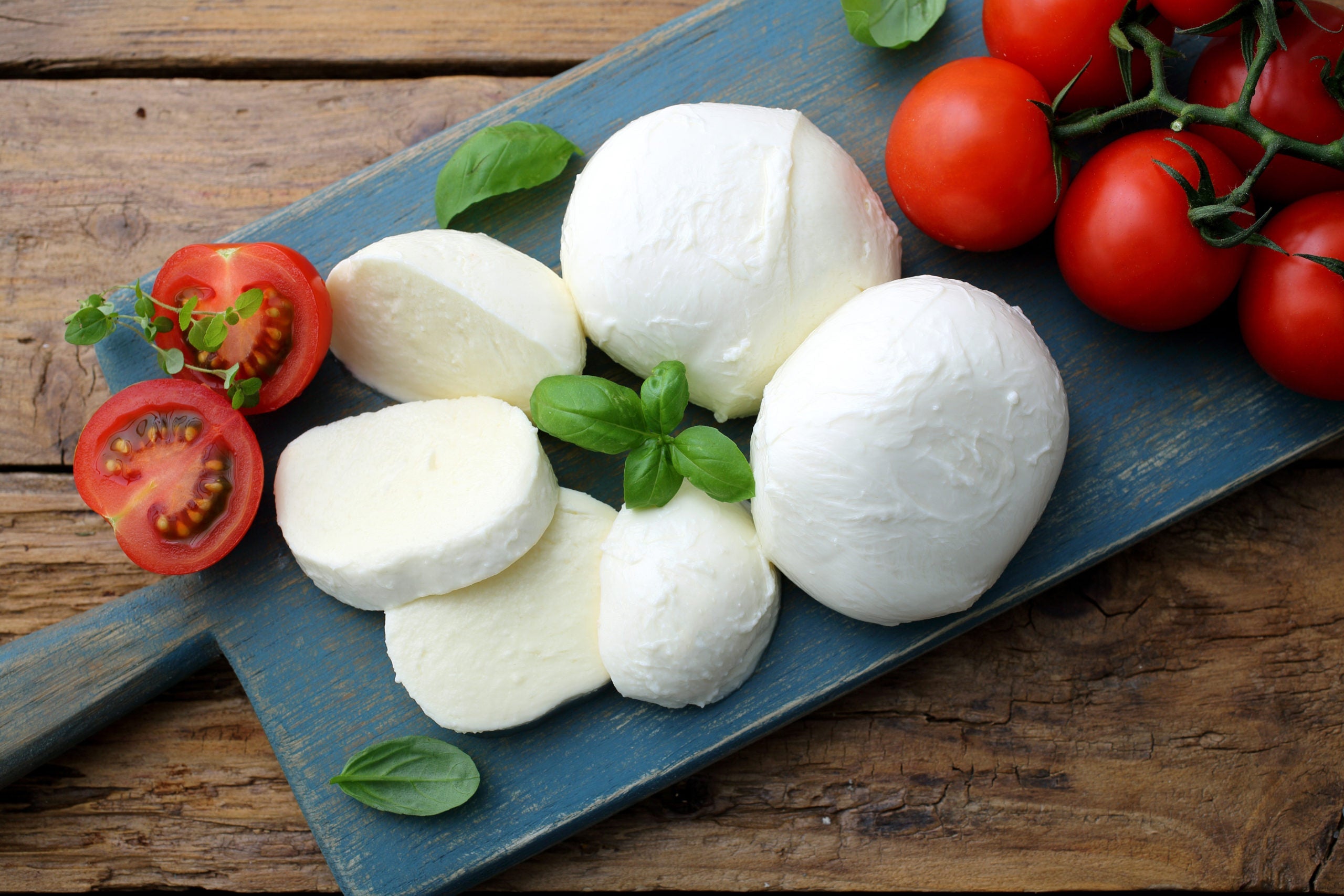
How to recognize fresh mozzarella?
Those who live in the area where Mozzarella is produced can recognize this cheese among possible attempts at adulteration put on the market to entice unsuspecting consumers.
How, then, can you tell if a mozzarella is fresh, and what characteristics should it have when purchased so as not to be deceived?
True Mozzarella has a pearly white color and a smooth surface, which, along with its initially elastic and then more melting consistency, are essential characteristics for distinguishing it. The label must also clearly state that it is made exclusively with fresh, whole buffalo milk.
When cut, a whitish serum will be released, along with the typical scent of lactic ferments. All these conditions, which make Mozzarella a unique and unsurpassed cheese, are only possible if specific environmental circumstances are present and thanks to traditional processing methods.
How long does it stay fresh?
Mozzarella's easy perishability is a symptom of its delicate nature. This makes it as prized as it is difficult to transport over long distances. Its preservation also requires many precautions. That's why, to eat a quality product, it's necessary to check the production date and prefer mozzarella from the Campania production area as the reference territory. In this regard, it's good to know that after 2 days from the packaging date, a Mozzarella is already considered old, even if not technically expired because it can still be used for cooking, but it must be removed from its preservation liquid and stored in the fridge.
How to store mozzarella
At this point, let's state something fundamental: Mozzarella should be stored exclusively in its liquid, well covered by the whey, out of the fridge, without a lid, and at room temperature for a maximum of two days.
Some tricks to avoid being fooled
To camouflage mozzarella that isn't exactly fresh, restaurants have invented infallible tricks for the less experienced: some dress it with oil, salt, and pepper, while others carelessly serve it despite its "wrinkled" appearance, a sign of how the salt has corroded the cheese, making it visible even from the skin. All this information is obvious to those who live in the production area, who would never dream of presenting it that way.
To the taste, its consistency should be almost elastic but not rubbery. Detecting a certain acidity on the palate is not a good sign but indicates that the deterioration process has already begun.
When cut, a fresh Mozzarella should release the right amount of milk. If this doesn't happen, something clearly went wrong in the coagulation process, or there are too many preservatives inside, or it could even be an industrial product.
Clearly, the price, if too low, can also be an indicator of quality.
Share